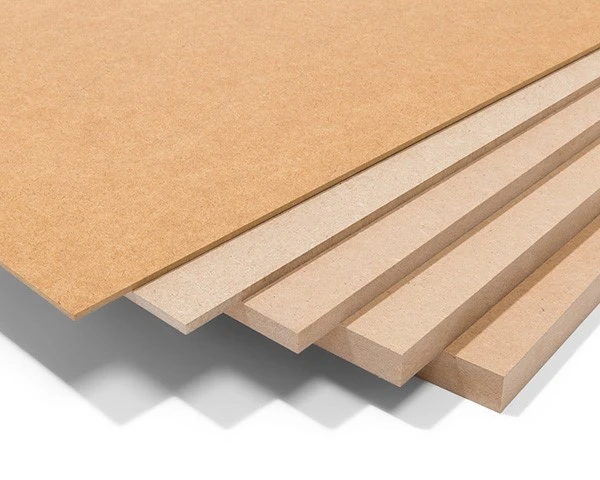
When creating MDF, manufacturers break wood down into the basic fibre or fibre lumps. For this reason, the particular species of wood, straightness, knottiness, etc. are not important. This allows manufacturers to source cheaper MDF raw material and keep the overall costs low.
The fibres are then combined with an adhesive and pressed together under heat. The heat is what cures the adhesive while making the fibres pliable during pressing.
You can purchase MDF in a variety of thicknesses and grades. It's the material typically used in ready-made furniture, cabinets, shelves in storage units and decorative wall cladding.
It's easy to think of MDF and plywood as the same thing when you see them in the home improvement section of your local store. But they could not be more different. Where the strength of one is the weakness of another.
Find out the differences between the two and where best to use them.
What is MDF?
Medium Density Fibreboard or MDF is an engineered wood composite.
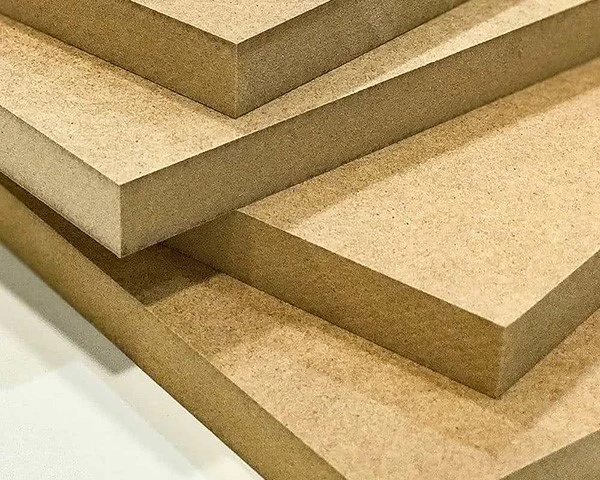
Veneered mdf is a great low-cost material for creating shelving, furniture, and interior wall claddings.
When creating MDF, manufacturers break wood down into the basic fibre or fibre lumps. For this reason, the particular species of wood, straightness, knottiness, etc. are not important. This allows manufacturers to source cheaper MDF raw material and keep the overall costs low.
The fibres are then combined with an adhesive and pressed together under heat. The heat is what cures the adhesive while making the fibres pliable during pressing.
You can purchase MDF in a variety of thicknesses and grades. It's the material typically used in ready-made furniture, cabinets, shelves in storage units and decorative wall cladding.
Characteristics of MDF:
Smooth, uniform, knot-free surface; consistent throughout the edges
A great substrate for veneer
Its surface is so smooth that it lends itself well to painting
Easy to split and damage; not as durable as plywood
Soaks water like a sponge which results in the degradation of the material
Impact resistance lower than that of plywood
Lighter than plywood
Easy to cut and cut edges are smooth with no splintering
Unable to hold screws
Easy to laminate, veneer, or lacquer
Absorbs some paints such as aerosol spray primers
Perfect for quality primers with oil as a base
Bonding agents contain low concentrations of formaldehyde