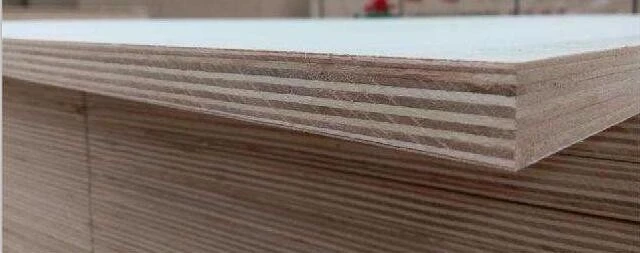
What is Plywood?
The basics you need to know about Plywood is that it’s a sheet material which is brought to life by combining layers of wood veneer, which are glued together. Each adjoining layer is rotated up to 90 degrees in a process we call cross-graining. Why is this done? Well, the major reason is that it gives the product super strength. Thanks to cross-graining Plywood is able to resist splitting when nailed at the edges, minimise expansion and shrinkage and bump up its stability. Similarly, when cross-graining an odd number of layers will be used. This provides us with a balanced sheet that won’t easily warp.
The core layers are also crucial to the strength of Plywood. These layers increase the separation between the outer layers where stress is at its highest, meaning its ability to fight back against bending is raised dramatically. Thanks to this method of design larger sheets of Plywood can be created while still handling similar loads by increasing the thickness. However, it’s also perfect for smaller sized sheets too. Because Plywood doesn’t lose any of its effectiveness or quality in smaller sizes it means we can offer a convenient solution for those who want Plywood delivered to their door!
Plywood History
Plywood’s history actually extends further back than you’d probably think. Many moons ago in 1797 a fellow by the name of Samuel Bentham, who served as a British Naval engineer, applied for patents that would help him produce veneers. These patents described the idea of using multiple layers of veneer combined with glue to make a thicker piece of wood. For those following along at home, this describes the exact process of creating Plywood and is the first known documented description of the product we have come to know and love.
Fast forward to 1865 when the United States of America get their first taste of Plywood and almost immediately they begin industrial production. Around the same time, artists had begun replacing their traditional canvases with Plywood to support their easel paintings. About 63 years later standard size Plywood (1.2m x 1.4m) saw mass production specifically to be used in building.