How to determine a plywood strength?
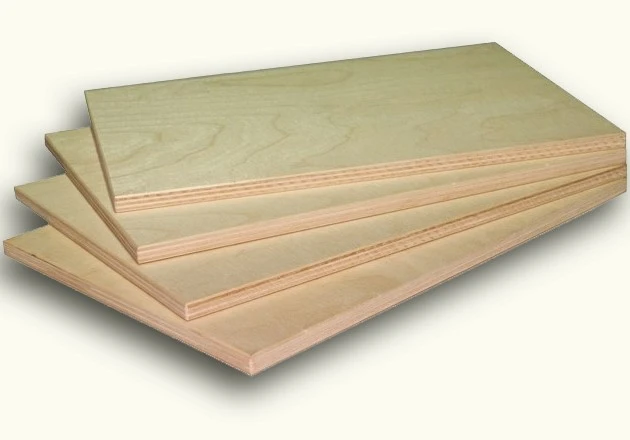
Since plywoods are nothing but an engineered product- made in factories. There is nothing special in the process that contributes to strengthening them, apart from some 3 basic factors that I’ve listed below.
Number of Layers
Type of wood used as veneers
Alternate cross sheeting.
Good quality Adhesives.
If you want to know further how plywoods are being manufactured in factories. I’m leaving a video link here.
After watching this video you will by yourself better understand how these 3 basic factors are the only factors that contribute to their sheer strength.
Layer count identifies the strength- (More layers mean more strength)
Strength is largely determined by layer count. In general, the layers count in plywoods comes in the odd count. Increased layers increase strength, as it should be obvious to any rational person.
Generally, “ply” is used to refer to layers that make up plywood.
The number of layers used tells us Grades like A grades plywoods usually have 7 plies or more, than C grades which refers to 3 plies.
It is possible to find thicker plywoods that have fewer layers compared to thinner plywoods with several layers.
3-Ply
This type of plywood has three layers of plywood, it has the strength and durability of plywood with more plies but looks more decorative, so it is suitable for indoor projects such as shelves or crafting any DIY wooden project.
5-Ply
The veneers of five-ply wood are stacked on top of each other. Although these plywoods have a high level of strength, they are not suitable for exterior use where hefty support is required, such as beams for roofs or as decking.
7-Ply or more
Several veneers can be used, usually, seven or more, to create an extremely strong, resistant frame that resists wind and damage.
Typically, plywood with this layer count is mainly used in roofing and exterior applications.
They can even beat the strongest hardwoods in strength such as oak, walnut, and maple.
Veneer type affects the strength
Plywood strength is strongly influenced by the type of wood that has been used in veneering.
This is divided into main groups.
Softwoods
and hardwoods.
Softwood veneers, such as cedar, redwood, and pine, make cheap plywoods that are strong enough to be used in applications that require a significant level of strength.
They are often used in the construction of rooftops, decks, and even as a form of exterior frame sheathing.
Hardwood plywood panels tend to have 5 to 7 layers or more layers can be added as per demand. It is extremely difficult to construct plywoods stronger than this.
Cross-sheeting, A reason for the strength
Why plywoods have more strength compared to any wood because of this factor: cross-sheeting.
This is already mentioned on the top, let’s twice describe it here.
Wood veneers are layered and glued in alternate directions so any weakness in one grain is countered by the layers above and below it in man-made boards.
The majority of the grain in a natural timber runs in the same direction; the grains are also generally much farther apart, which makes the wood more brittle than plywood; it also contains knots that can seriously weaken wood depending on the size of the knots and how many there are.
It is also possible for solid wood to shrink, causing cracks and shakings, which weaken its strength.
For some structural purposes, plywood with an equivalent thickness will be much stronger and more flexible than real wood, making it much less likely to break under stress.
Regular solid wood is strong; however, all the grain is running in the same direction. While this creates strength under some circumstances, it can create weakness in others.
Good quality Adhesives
The main benefit of plywoods over natural wood also lies in which adhesive has been used in the manufacturing process.
Additives serve as the final coat, using them can make a board resistant to water, temperature, sunlight effects, insect-proofing, as well prevent mildew and hazards can be prevented with the right adhesive.
Considering that plywoods for different purposes use different adhesives.
With this being said, aircraft plywoods (one of the highest quality) use top-quality adhesives to prevent water-damaging effects, temperature effects.