

Plywood is commonly used in building furniture, workshop projects, cabinets, or a house and has a lot of advantages:
It is very strong ( compared to softwoods of the same thickness).
It is much cheaper than lumber for larger-sized panels. Imagine being able to build something 40″ x 30″ out of hardwood! First, you won't find a 30″ hardwood panel easily. You would need to join multiple boards to make a panel. And even if you did find a large panel, it would be outrageously expensive!
It is extremely stable due to the way it is manufactured.
Number of Plies
A common term for plywood is the number of plies, such as 5-ply, 7-ply, etc. These are the number of veneer layers that make the plywood.
The number of plies used varies, but are always in odd numbers. This is because the two outer layers of the veneer must run in the same direction to keep the panel balanced.
You can have plywood with the same thickness but different plies. For example, a 3/4″ plywood can have 7 plies or 11 plies.
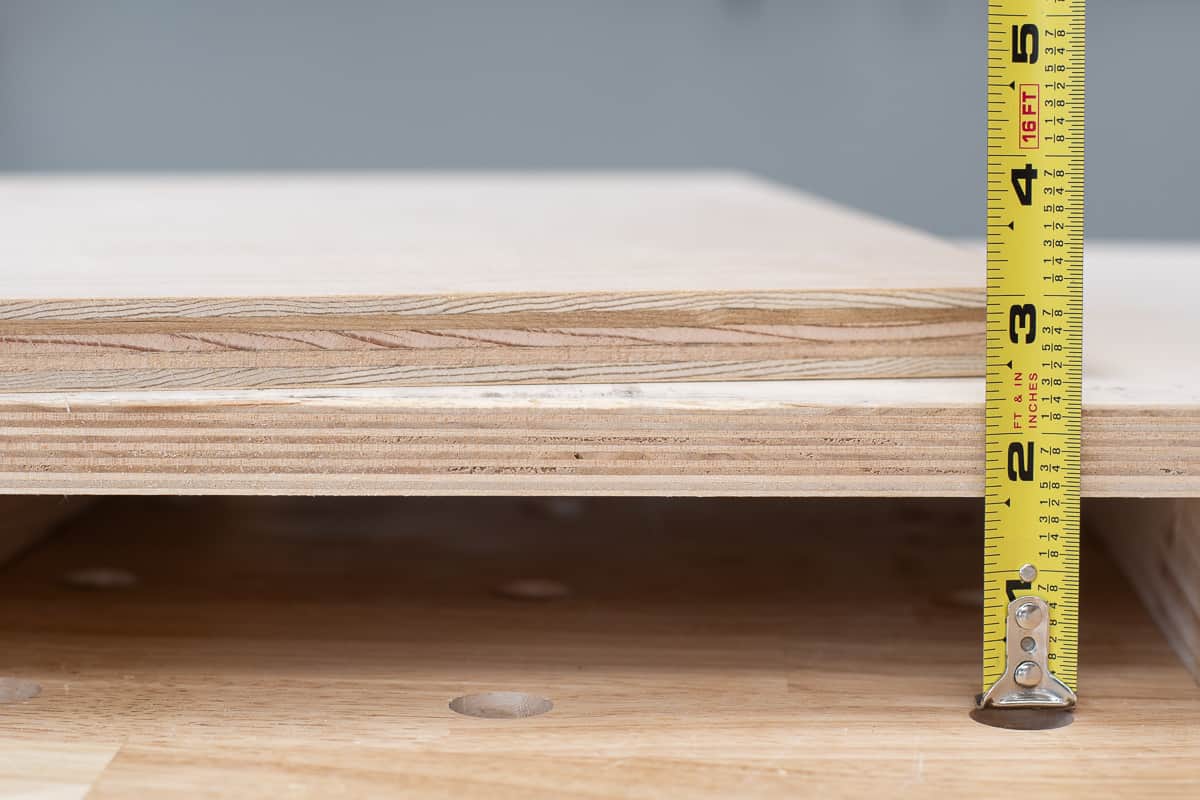
Since they are both the same thickness, the 11-ply plywood will have thinner core veneers. This means more layers with more glue, leading to fewer voids, more rigidity, and stronger boards. The fewer voids also allow you to leave an exposed edge on plywood and have a much better appearance. Baltic Birch Plywood is the best example of this.
As the number of plies increases, so does the cost. The number of plies you choose depends on the final application.

