

What is MDF Wood?
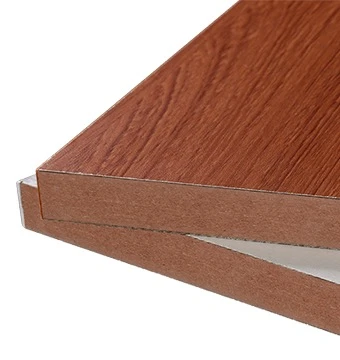
The name MDF refers to medium-density fiberboard, a composite wood engineered using wood fibers. The wood fibers used for MDF are very fine, so the resulting fiberboard doesn’t have noticeable wood grain, knots, or rings. Fibers, heat, and glue are used to make tight fiberboards.
Either softwood or hardwood can be used to make MDF. Either way, the resulting fiberboard is denser and stronger than plywood. It also has veneer sealant applied to it to make the composite wood resistant to water damage. It makes MDF an excellent substrate for melamine, thermofoil, veneer, heavy lacquer, and vinyl.
Types of MDF wood
There are two basic types of MDF wood, which are:
Moisture resistant – often used in wet areas like bathrooms
Fiber retardant – used in places where fires or heat often occur such as the kitchen
Quality & Cost
MDF wood is much sturdier than plywood, so its quality is good. It is also much better than traditional wood as it virtually has no imperfections. It always comes primed, ready for painting, and has no twists or warps. In terms of cost, it is more expensive compared to particleboard but is cheaper to replace than plywood.
Advantage of MDF
MDF wood has three main advantages – it’s low-priced, is not susceptible to voids and wood knots, and can hold paint easily thanks to its smooth surface. It can also handle high loads, but not too much weight. MDF is an all-purpose material capable of handling a range of jobs despite the low price.
Perhaps one of its best advantages is its manufacturing process that is similar to recycling, so creating MDF wood saves trees. Thanks to the chemicals used in its processing, MDF resists some insects. With its excellent density, it is easy enough to handle MDF for various wood projects.
Disadvantage of MDF
One of the most significant disadvantages of MDLF wood is it’s weaker than natural wood, so it isn’t ideal to use for shelves. It does not last long, which means a loss of money even though it is considerably cheaper. It is also easily damaged, buckling fairly easily under pressure.
MDF is also more water-absorbent, which makes it swell over time. As such, you must be conscious when using it. It also doesn’t work well with screws or nails. If punctured with a nail, a fraction may appear. The worst disadvantage is it contains formaldehyde, so you don’t want to inhale its dust.
What is Plywood?
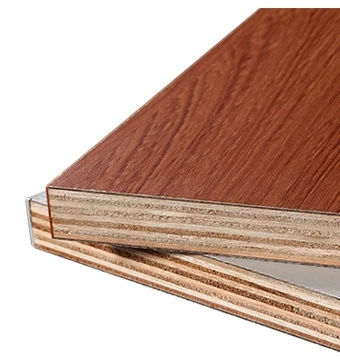
Out of the three, plywood is the sturdiest wood composite. This one is made up of several wood veneer sheets, pressed and bonded to develop a solid piece of engineered wood. The technique used to manufacture plywood is called cross-graining. It lessens expansion and shrinkage while increasing the strength consistency of the board.
The most notable characteristic of plywood is it has different grades depending on the purpose. The grade of plywood depends on the type of wood ply, the adhesive used, thickness, and the process of manufacturing. This means each grade differs a lot, making it essential you know about them to pick the right one based where or what you want to use it for.
Higher-grade plywood is great for making shelves and cabinets. On the other hand, lower-grade ones are perfect for subflooring. The plywood grade isn’t the only factor to consider when choosing plywood. It also has many different types with unique traits and different uses, which would be helpful to know.
Types of plywood:
The different types of plywood are:
Softwood – great for grooved flooring
Hardwood – often used for heavy-duty flooring or wall structures
Decorative – the type you can easily draw on and dye
Flexible – plywood that you can use for curved parts
Tropical – this type is a soft, low-cost wood
Marine – the kind of plywood perfect for boats and docks
Aircraft – this plywood has high heat and humidity resistance and high strength
Quality & Cost
Plywood is one of the most durable wood composites. It is the engineered wood you want to use for anything sturdy, be it a door or a shelf. However, this quality is based on the grade, which defines the toughness of the wood composite. As for the cost, it will depend on the size but it can range from $5 to $55 per sheet.
Advantage of Plywood
Plywood has several advantages, such as durability and strength far better than MDF wood. It can be made from different species of wood and has a wide range of thicknesses. Compared to MDF, it sustains less water damage. There are plenty of benefits to using plywood, including:
Smooth surface
Easily painted or shaped
Holds screws well
Easily cut into different shapes
Resistant to cracking, warping, twisting, or shrinking
Available in big size
Economical to use
Disadvantage of Plywood
Plywood has many benefits, but its disadvantages are almost as much. For one, it is more costly than MDF wood. Its edges often splinter during transportation, not to mention the layers are exposed. This makes it so that you must finish the edges with veneer or laminate. Other disadvantages of plywood include
Hard to cut
Can be damaged by water
Can cause eye irritation due to volatile organic compound
Must be covered with laminates to increase the lifespan
Susceptible to termites

