

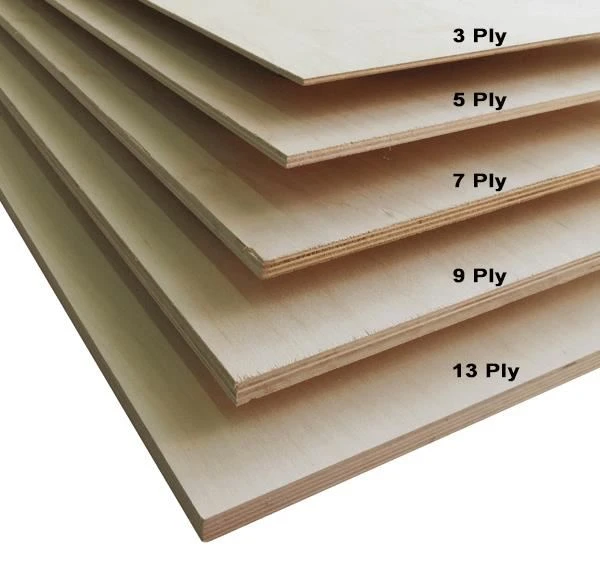
The term “ply,” as it refers to plywood, means the layers manufacturers use to create the boards at various thicknesses. Some projects won’t need a thick board, while others will. Ply achieves the right depth and can also make the boards stronger.
Each layer is known as a wood veneer. A veneer is a thin piece of wood that you can glue together to create a different number of plies. Plywood, then, is the finished product when the manufacturer glues the veneers together.
It’s important to note, though, that veneers can also have various thicknesses. Depending on your location, some parts of the home must meet specific standards for the number of plies required for a board of a certain depth, especially with external walls and roofing.
1. 3-Ply
3-ply is one of the most common types of plywood. This kind has three layers of veneer and is layered enough to be strong and durable but can look more decorative than plywood with more plies, making it a good choice for indoor use.
2. 5-Ply
5-ply pieces of wood have five layers of veneers. This is another common type of plywood used for projects that require less durability and strength than those needed for exterior use.
3. Multi-Ply
Multi-ply plywood is mostly for exterior use and roofing. It can comprise several veneers, usually seven or more, to create an incredibly strong, unyielding frame for a home that can stand up to wind and damage.

